
Continuing on with looking at the power of our speech, let's explore the third of our speech guidelines.....
Don't hurt people (including yourself) with your words—use words that are kind and pleasing to others (and yourself).
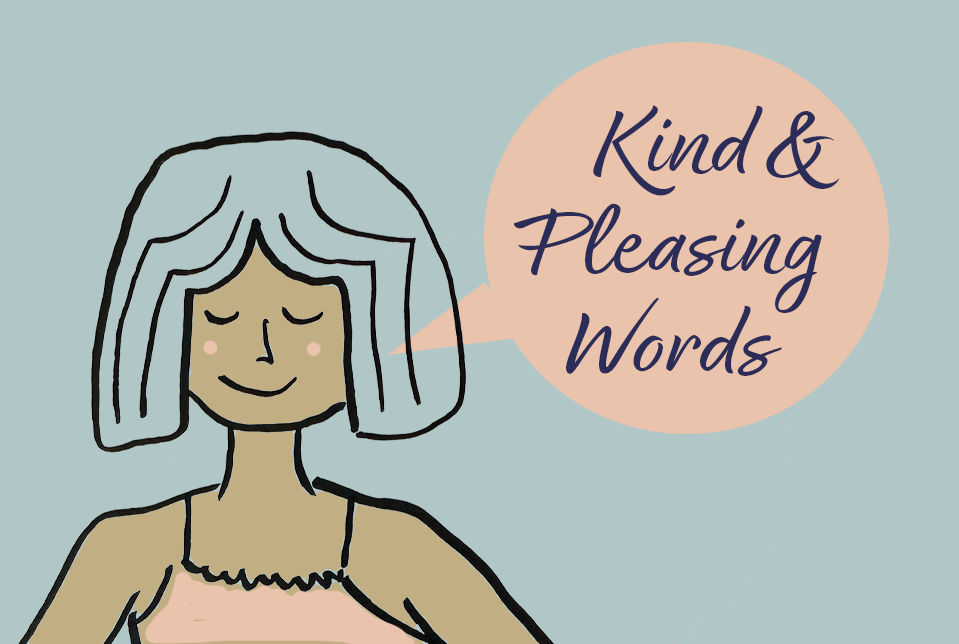
Harsh speech includes words that hurt others, whereas kind speech is about being selective with our words in order to be kind and pleasing toward others and ourselves too. Sometimes we can speak very harshly to ourselves with our inner dialogue, this adversely affects our happiness and peace of mind.
Whether we are speaking to ourselves or others, it's our intention that matters more than what we say or how we say it. Harsh speech can be loud, full of swearing or sarcasm, or even soft and sweet. It is considered harsh s speech if the intention behind it is to hurt.
With regard to our internal speech—the little and sometimes loud voice in our head—rather than listen to a harsh critic internal dialogue, we have the power to play a different tune featuring kind, encouraging words. I have been noticing my critical task master giving me a hard time lately. It has been sharing unhelpful harsh speech, including impatience over my recovery rate, wanting to suppress feelings of sadness or disappointment, and suggesting I should feel guilty, not good enough or unforgiving of myself or others. Awareness of such unkind speech and acceptance of it with a ‘thanks for sharing’ and then tuning into my wise self to replace them with kind encouraging words, is a meaningful practice that gives me peace of mind. When I check in with my wise self before speaking, both to others and myself, I am reminded to use words that are kind and encouraging.
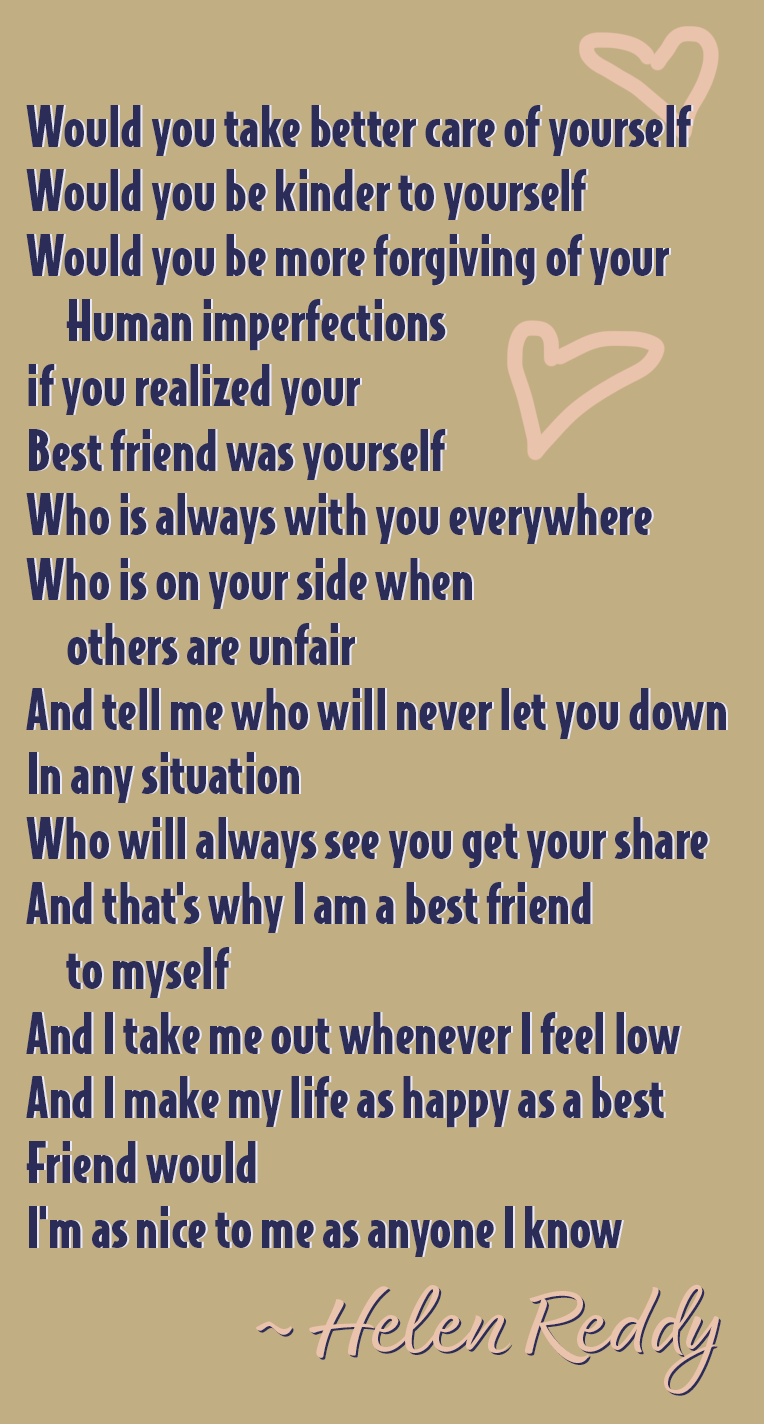
The lyrics of Helen Reddy's song, Best Friend, remind me that I can rewrite a harsh critical soundtrack to a kind encouraging one. The words suggest if we realised we were our own best friends we would take better care of ourselves and be kinder and more forgiving of our humanness.
Helen tells us this best friend self is always with us, on our side and there to make sure we get our share and are treated fairly. This friend will never let us down. Her words encourage me to be my own best friend. So, I have been doing my best to allow and welcome feelings of sadness and to thank that harsh critical voice for sharing, then I can check in with my wise best friend for some kind and encouraging suggestions.
For me these include replacing :
'You should be getting on with your life by now' with 'Be patient with where you’re at, rest and be gentle with yourself. Get some help or support'.
'You shouldn't be feeling sad or disappointed' with 'Allow and accept the sadness, welcome and love that part of you'.
‘You should feel guilty about not being on top of things’ with 'This has been a difficult time, you are doing your best, give yourself time.'
'You should be unforgiving of your mistakes and shortcomings' with 'Forgive yourself for your humanness - you are doing your best.'
'You are not good enough; you should be doing more and being better' with 'You are enough just as you are and are doing your best. You are loved and loveable just as you are. Be gentle with yourself'.
‘You should be more upbeat’ with 'Give yourself a break'. It may be helpful to explain to others that you are feeling flat, this can take the pressure of your expectation to be jolly and upbeat when you are not feeling that way.
This is a much more pleasant soundtrack to listen to and will promote our peace, confidence and contentment.
Other helpful things to say to ourselves or to do when feeling down or when that critical task-master chips in, include:
‘Give yourself a break, you’re doing your best’
‘Give yourself credit, stop criticising yourself for what you aren’t and start loving yourself for what you are’.
‘You have no need to compare yourself to others, we are all uniquely who we need to be.’
‘You have plenty of time you do not need to rush.’
Write a gratitude note to yourself
Write a forgiveness note to yourself—forgive your past self
Give yourself attention and care
Surround yourself with calm, positive energy. Pile onto other's happiness—enjoy them enjoying themselves.
Connect with others to receive and give support.
Do something that brings you joy
According to the Buddhist texts the karmic correlations for speaking harshly is that we will perceive others as speaking unkindly to us, saying things we don't want to hear, and have the perception of noise pollution. So, in order to create an environment where we perceive others as friendly and an environment as harmonious (both inside and out) we need to use kind, friendly and pleasant speech both externally and internally.
For me the most helpful tool I have when it comes to being kind with my speech is to tune into my wise self, my own best friend, to be reminded to be truthful, inclusive, kind and encouraging with my speech
both to myself and others, always
.